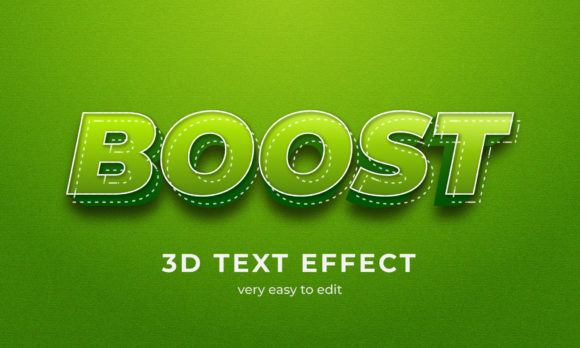
Boost 3d Text Effect: A Dynamic Graphic Element for Modern Designs
In a digital landscape saturated with flat, minimalist aesthetics, standing out often requires a bold departure from the ordinary. This is where Boost 3d Text Effect steps in as a transformative graphic element. It isn't just a font; it is a complete design asset engineered to add depth, dimension, and immediate visual impact to any project. Whether you are crafting a high-energy social media post or designing packaging that needs to grab attention on a crowded shelf, this editable 3D text effect offers the versatility required for professional-grade results.
The visual personality of Boost is defined by its dynamic structure. Unlike standard typefaces that sit passively on a page, this effect creates an illusion of physical presence. The three-dimensional rendering gives the letters weight and volume, making them appear to pop off the screen or the paper. This characteristic is particularly valuable for designers looking to establish a strong visual hierarchy without cluttering the layout with excessive imagery. The RGB color mode ensures that these elements translate perfectly across digital platforms, maintaining their vibrancy and clarity whether viewed on a smartphone or a large format monitor.
Where the Boost 3d Text Effect Shines
The adaptability of this graphic element makes it suitable for a wide array of creative endeavors. For entrepreneurs and small business owners, it serves as a powerful tool for building brand identity. When applied to logo design, the 3D aspect adds a layer of sophistication and modernity that can elevate a generic mark into a memorable icon. Similarly, in editorial design and publishing, using Boost for headlines can break up dense blocks of text and guide the reader's eye naturally through the content.
Digital marketers will find particular value in its application for web design and social media graphics. In an environment where users scroll rapidly, static text often gets overlooked. A 3D text effect like Boost introduces movement and texture, compelling the viewer to pause. It works exceptionally well for promotional banners, event invitations, and limited-time offer graphics where urgency and excitement are key messages. Furthermore, for crafters and hobbyists involved in DIY projects, the ability to customize these elements allows for unique personal branding on merchandise or handmade goods.
When considering commercial fonts for packaging design, the Boost effect offers a distinct advantage. The dimensional quality mimics the tactile experience of embossing or foil stamping, providing a premium feel at a fraction of the production cost. This makes it an ideal choice for product labels, box designs, and marketing collateral that need to convey quality and innovation.
Enhancing Readability and Brand Perception
Typography does more than convey words; it shapes how an audience perceives a message. The use of Boost 3d Text Effect influences brand perception by signaling confidence and creativity. A brand that utilizes bold, dimensional typography suggests a forward-thinking approach and a willingness to take risks. This psychological cue can significantly enhance audience engagement, as viewers subconsciously associate the visual complexity with higher effort and quality.
From a practical standpoint, readability remains paramount. While 3D effects can sometimes obscure legibility if overused, Boost is optimized to maintain clarity even with its added depth. By strategically placing this typeface against contrasting backgrounds, designers can ensure that the message remains clear while still benefiting from the visual flair. This balance is crucial for maintaining professionalism. A well-executed 3D text effect enhances visual hierarchy, allowing important information to stand out without sacrificing the overall aesthetic cohesion of the design.
Consistency is another factor that contributes to long-term brand recognition. Because Boost is available in a specific, customizable format, designers can apply the same stylistic rules across various touchpoints. Whether it is a website header, a mobile app interface, or a printed flyer, the consistent use of this 3D style helps reinforce the brand's visual language. This uniformity builds trust with the audience, as they begin to recognize the distinctive look associated with the brand.
Practical Guidance for Implementation
Selecting the right design asset involves more than just liking the look; it requires evaluating how the tool fits into your workflow. The Boost 3d Text Effect is delivered as a single AI file compatible with Adobe Illustrator CC2020. This version compatibility ensures that most professional designers can open and edit the file immediately without needing to upgrade their software suite. The inclusion of free fonts within the package further streamlines the process, eliminating the need to hunt for matching typefaces.
Evaluating project fit starts with understanding the dimensions provided. At 2000x1200 pixels, the file offers a high-resolution canvas that supports detailed editing. This size is sufficient for both web-based applications and print-ready drafts, though final print outputs should always be checked against specific resolution requirements. The RGB color mode is perfect for digital deliverables, ensuring that colors appear exactly as intended on screens. If print production is necessary, designers may need to convert the color profile to CMYK during the final export stage to avoid color shifts.
One of the standout features of this graphic element is its ease of editing. Designers can manipulate the layers, adjust the lighting angles, and modify the color palette to suit specific brand guidelines. This level of customization is essential for creating unique variations that avoid a "cookie-cutter" appearance. When testing font pairings, consider balancing the heavy, dimensional nature of Boost with simpler sans serif or serif fonts for body text. The contrast between the complex headline and clean supporting text creates a harmonious composition that is easy to read and visually appealing.
For those concerned with licensing, it is vital to review the included documentation carefully. Commercial usage rights vary by creator, so verifying that the license covers your intended project scope—whether personal, editorial, or corporate—is a necessary step. Assuming the file includes the necessary permissions for commercial use, Boost becomes a versatile resource for agencies and freelancers alike.
Maximizing Creative Potential
To truly leverage the power of Boost 3d Text Effect, experiment with different lighting scenarios and background textures. Moving beyond simple solid colors can add another layer of realism to the design. Try overlaying the text on gradients, subtle patterns, or photographic backgrounds to see how the 3D form interacts with the environment. These small adjustments can transform a standard graphic into a standout piece of art.
Ultimately, the value of this design asset lies in its ability to save time while delivering high-impact results. Instead of spending hours modeling text from scratch in 3D software, designers can utilize this pre-optimized template to focus on strategy and storytelling. For bloggers, publishers, and content creators, this efficiency translates to faster turnaround times and more polished final products. By integrating Boost into your design toolkit, you gain a reliable method for adding depth and character to your visual communications, ensuring your work resonates with your target audience in a meaningful way.